The Ultimate Heartbreak: Why England’s Semi-Final Loss to Argentina Hurts Most in 60 Years of Football History
There is heartbreak, and then there is the slow-motion car crash of England in a World Cup semi-final.
For 84 minutes at the Atlanta Stadium, a nation dared to believe. The scoreboard read 1-0. The ticket to New Jersey for Sunday’s grand finale was practically in the breast pocket. The phantom weight of 1966—exactly 60 years of hurt—was on the cusp of being lifted.
And then, in a devastating seven-minute span, the defending champions Argentina ripped up the script, leaving English players scattered across the turf in identical postures of despair. The 2-1 defeat will take its place in the pantheon of agonizing English exits, but this one cuts deeper than any that came before.
The Ghost of Tournaments Past: Why 2026 Hurts More Than 1986 or 1998
England and Argentina share a World Cup rivalry forged in high drama and controversy. Yet, previous chapters offered England a shield—a villain, an excuse, or a sense of injustice to nurse.
-
1986 (“The Hand of God”): England could blame Diego Maradona’s hand and a refereeing blind spot.
-
1998 (Saint-Étienne): England could curse David Beckham’s red card or the lottery of a penalty shootout.
In 2026, there is no villain. No refereeing conspiracy. No red cards. Argentina simply refused to yield, and England fell victim to their own psychological and tactical fragility. To have the prize so close, and to lose it purely because of a collective collapse, makes the medicine impossible to swallow.
The Tactical Turtle: Where It All Went Wrong
The tragedy of the match lies in how perfectly Thomas Tuchel’s side had executed their game plan for over an hour. Anthony Gordon’s brilliant 55th-minute strike was a fully deserved breakthrough, rewarding England’s high energy and bravery.
But instead of going for the kill, England did what English teams have done for generations: they retreated.
   England's Momentum Shift (Post-Goal)
   [55'] Gordon Goal (1-0) ----> High Press & Front Foot
   [71'] Konsa Substituted ----> Defensive 5-3-2 "Turtle" Mode
   [85'] Fernandez Goal   ----> Pinned Back, Inviting Pressure
Tuchel’s decision to substitute goalscorer Gordon for defender Ezri Konsa in the 71st minute signaled a full retreat. England went into “turtle” mode, trying to defend a slender lead for twenty-plus minutes against the most clinical attack on earth.
As Tuchel himself conceded post-match:
“Argentina played with more risk, with more rhythm… which freed them up and held us back because we played suddenly with a feeling that we have a lot to lose.”
The Messi Tax: A Masterclass in Decisive Moments
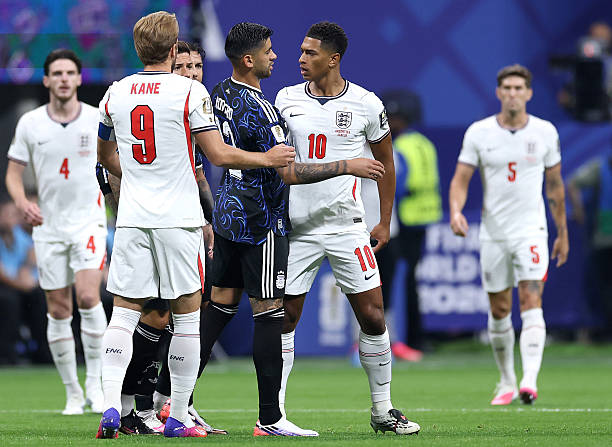
For most of the afternoon, England’s midfield of Declan Rice and Elliot Anderson had kept Lionel Messi relatively quiet. But players of Messi’s caliber do not need 90 minutes; they only need a moment.
In the 85th minute, as England sat suffocatingly deep, Messi picked up a short corner and spotted Enzo Fernández hovering at the edge of the box. A simple, crisp square pass, and Fernández unleashed a rocket into Jordan Pickford’s corner.
Just as the English squad was mentally preparing for the grueling trial of extra time, Messi struck again in the 92nd minute. Dropping onto his left foot, he sent a pinpoint cross into the box for substitute Lautaro Martínez to head home the winner. Two moments of absolute elite composure from a generational great, exposing the cost of England’s passivity.
60 Years of Hurt… and counting
Had England held on, they would have booked their first World Cup final ticket since Sir Alf Ramsey’s class of 1966. To fall at the penultimate hurdle is painful; to do so for the third consecutive time in semi-finals (following West Germany in 1990 and Croatia in 2018) points to a recurring psychological barrier.
As Argentina prepares to meet Spain in a heavyweight final in New Jersey, England is left to pack its bags and fly home. The 60-year wait goes on, and the Atlanta collapse will haunt this generation for the rest of their lives.